The Art of War by Sun Tzu Defining Compettive Positiion
Sun Tzu and the art of digital marketing strategy [Part ane]
What tin can an ancient text practise to help your digital marketing?
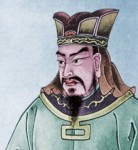
Lord's day Tzu'due south The Art of War is a widely studied piece of literature, then communicating its principles from reading it feels a petty like learning to drive a auto by watching a moving picture with a car chase in it.
What I'd immediately remembered (from reading it 9-10 years ago) was that the volume itself is brusk and powerful. Each affiliate layers onto what was taught in an before chapter.
Despite the title indicating otherwise, information technology'due south role scientific discipline and part philosophy; it centres around the idea of winning without conflict, by competing based on position, not through 'warfare'. This is immediately powerful and relevant to marketers with experience in make or marketing strategy.
I recall that you can summarise the whole book (very crudely) with two questions:
How do I use information that is available to empathise my strategic position?
How do I make the best decisions to advance my strategic position?
Unproblematic, eh!? And, already applicable to digital marketing. Which is why it's been then popular in business and why nosotros thought it would be good for the states to think most at Smart Insights. The application isn't so easy, but nosotros've outlined the broad context below in the hope that yous can ask better questions of your current position - the decisions to advance that position will come along side by side calendar week as nosotros delve deeper.
Your strategic position - a sticky challenge that plagues modernistic marketing
We know that strategy fundamentally depends on acquiring and using information to best control situations effectually us, and we make strategic decisions based upon what nosotros see, hear and sympathise.
For thoroughbred digital marketers, the guys and girls who alive in data for decision making, this might hurt initially… we don't really "know" what's going on ...at least that's what Sun Tzu would say. Nosotros feel that we never accept enough data, don't nosotros? We get paralysed by not having plenty information, and equally freeze and get lost if nosotros have also much. Sound familiar? It might feel easier where nosotros tin can run into what nosotros think is nether our command, in an analytics dashboard for instance, only it'southward misleading co-ordinate to Sun Tzu. We but see and control tiny elements out of the vast amounts of information. Sunday Tzu believed that control is the infrequent and misleading exception and anarchy is the larger reality, and realising this is where advantage lies.
Virtually information is unknown, or totally unknowable
Our perception of reality is full of blind-spots, it'due south incomplete, a mix of things that we don't know and things that are as well totally unknowable. How many times do unexpected 'events' occur that throw your data upside downward? A lot from my experience; it's business equally usual! Nosotros never quite "know", do nosotros?
In marketing, this problem is made worse as more and more data becomes bachelor, more than data isn't necessarily skilful if there'due south no model to process it.
By recognising that information is gathered on imperfect models from increasingly imperfect sources, and appreciating that we see "our" reality, non "the" reality, we can choose to widen our view, use better decision making models and brand decisions those based on more of what is, rather than what we just think is.
Our opening primer on the 13 chapters of The Art of War
Though non so important as the above to make the point, we've laid out the 13 chapters of the book hither every bit a primer, a "digested read"…
- Laying Plans- The start chapter is around the five primal factors (mission, climate, ground, command and methods) then that a commander (or marketer!) tin calculate his or her chances of victory earlier setting out. Consider the factors for achieving strategic marketing over tactical…. In warfare, every bit in business organisation, there are three key factors that can determine who will be more likely to win. These three factors are: The moral police force; the commander or leadership, every bit well as the method and management. Much of Sun Tzu's instruction are about respect and gaining the trust of your army (organisation) and of course your customers. Potent virtues and the discipline of each team member's roles and responsibilities, including your own provided leadership and clarity, matters enormously. Nosotros'll take a expect at this in more than item in the post, next week.
- The Challenge- the economy of warfare (marketing) recognises that success requires winning small decisive engagements speedily. Successful armed services campaigns crave limiting the cost of competition and conflict."In war, and then, let your corking object be victory, non lengthy campaigns." Defeat your opponent fast, so that you lot won't become fatigued and you won't lose strength in resources. This ways putting forth all your best efforts to defeat your opponents at the correct time and on the right areas, then that competitors lose the want to win.
- The Plan of Set on- a key source of strength is unity, not size, Tzu discusses the five factors that are needed to succeed: Assail, Strategy, Alliances, Army, and Cities. Ensure good preparation and use the correct strategy, such as working out when indirect approaches volition be more effective and less energy-draining than direct approaches. This ways knowing your marketplace and marketing thoroughly, learning about the tactics, competition and allies (influencers) that have been around for years, before your time in the game. Await for the strategies that bear witness most benign by using your intelligence and competitive reward.
- Positioning - "Know your enemy and know yourself", Lord's day Tzu warns. If you lot do so, then you lot will win a hundred out of a hundred battles, he promises. Detailed knowledge of your opponent means that you know their brand behaviours, their strengths and their limitations. Merely in lodge to not accept this same tactic applied to you effectively, yous must defend existing positions until a commander (or marketer) is capable of advancing from those existing positions in safety. Recognise and pursue opportunities without creating opportunities for the enemy. This too means being able to change tactics when information technology's clear that your usual approach is failing – Sun Tzu summed this upwardly as: "He who can modify his tactics in relation to his opponent and thereby succeed in winning, may be chosen a heaven-born captain".
- Energy- the use of creativity and timing in building an regular army's (or system's) momentum. In war, this concerns directing the momentum of the ground forces to focus its energies in the most artistic and timely manner without called-for all of those precious resources. Having the focus and organising resources effectually the goals. The best organisations are the ones with talent and where those people commit to their strengths throughout the course of the campaign, they are recognised, organised and encouraged by the leaders.
- Illusion and Reality- an ground forces's (or arrangement's) opportunities come from the openings in the environment caused past the relative weakness of the enemy in a given area. "Strike the weak and avoid the strong", Sun Tzu advises. Again, yous demand to know your enemy well in order to spot their weak points, and then attack them. Being offset to attack puts you in the stronger position because y'all lead the mode co-ordinate to how y'all have chosen (imposing your intent), and for your opponent, playing grab-up is much harder.
- Engaging The Forcefulness- the dangers of direct conflict and how to win those confrontations when they are forced upon the commander. Manoeuvre with intelligence. You tin lead an army of 1000 soldiers as easily as 10 – it is simply a matter of signs and communication. Establish a common language between you and your organization, a strong sense of 'make purpose' is powerful. Implement skillful communication and trust in your team. Remember that the base for a cohesive and cooperative team is clear, abiding advice and mutual support.
- Variation in Tactics- focus on the need for flexibility in an army'due south (or arrangement's) responses. Reply to shifting circumstances successfully. Vary your tactics, and you win. There are two set on methods: the direct and the indirect. The direct method may be used openly, they're expected, only indirect methods to secure victory are the unforeseen, the unexpected, they throw the confidence of your competition. Be certain to disguise your intentions as best as possible, to avoid detection when you're nigh to vary your arroyo.
- Moving The Force- the different situations in which an army (or organisation) finds itself equally information technology moves through new territories, how to respond to these situations, sympathize the intentions of other organisations. As your army (organisation) progresses, remember to sustain all your aims on winning throughout the entrada. Try to understand your opponent's strategy and destroy it, and bear in mind at all times that: "The clever fighter imposes his will on the enemy, simply does non allow the enemy's will to be imposed on him". Lookout man for the competitors changes in tactics and situation.
- Situational Positioning- the three general areas of resistance (distance, dangers, and barriers) and the 6 types of ground positions that arise from them. These are the six ways of footing. They are the general's responsibility, and must be examined. In warfare, they are flying, insubordination, deterioration, collapse, chaos, and setback. These half dozen situations are not caused past Sky or Ground, but past the full general and the situation. Success and Failure in any organization starts from the top. The leader (strategist, CEO) is responsible for any and all events that occurs in the organisation.
- The 9 Situations- describes the ix common situations in a campaign, and the specific focus that a commander (marketer) volition need in guild to successfully navigate them. Use the all-time position and tactics in relation to the surroundings and to your competition. Threaten your contest's remaining valuable strategies and positioning to forestall them from connecting their weakness with their strengths. Know how to drive your competition into a position where their weaker self is all they have left to rely upon. Where it is articulate that your opponent has failed to adequately prepare for the situation, strike fast if they let a door open.
- Fiery Attack- the use of weapons (tactics and techniques) and the specific use of the environment as a weapon. Be "fast as the wind" and as "unmovable" as the forest. That means that your attack must be very quick, but your campaign and positioning should remain very consistent. Remember that the army who wins is the one that shares the same spirit throughout all its ranks, keeping truthful and remaining consistent. This section examines the 5 targets for assault, the 5 types of environmental attack and the responses to attacks.
- The Use of Intelligence - the importance of developing trusted information sources. When you take the opportunity, inquire about your competition's type of campaign, weaknesses and strengths from people in a position to know best; of course, with the advent of the Net this has never been easier, something Dominicus Tzu didn't take available! Brand the most of your sources of data to learn all that you can about your opponent. The secret of cracking princes and warriors that were regarded as geniuses was in actual fact principally only previous noesis, noted diligently then well applied.
Some great Sunday Tzu resources - I've referenced multiple great resources (including the volume here) which you can see here, here and here. Cheque them out, information technology's genuinely useful stuff to help move from purely tactical decision making to strategic decision making.
Recommended Blog Posts
Source: https://www.smartinsights.com/digital-marketing-strategy/digital-strategy-development/sun-tzu-and-digital-marketing-part-1/
0 Response to "The Art of War by Sun Tzu Defining Compettive Positiion"
Postar um comentário